

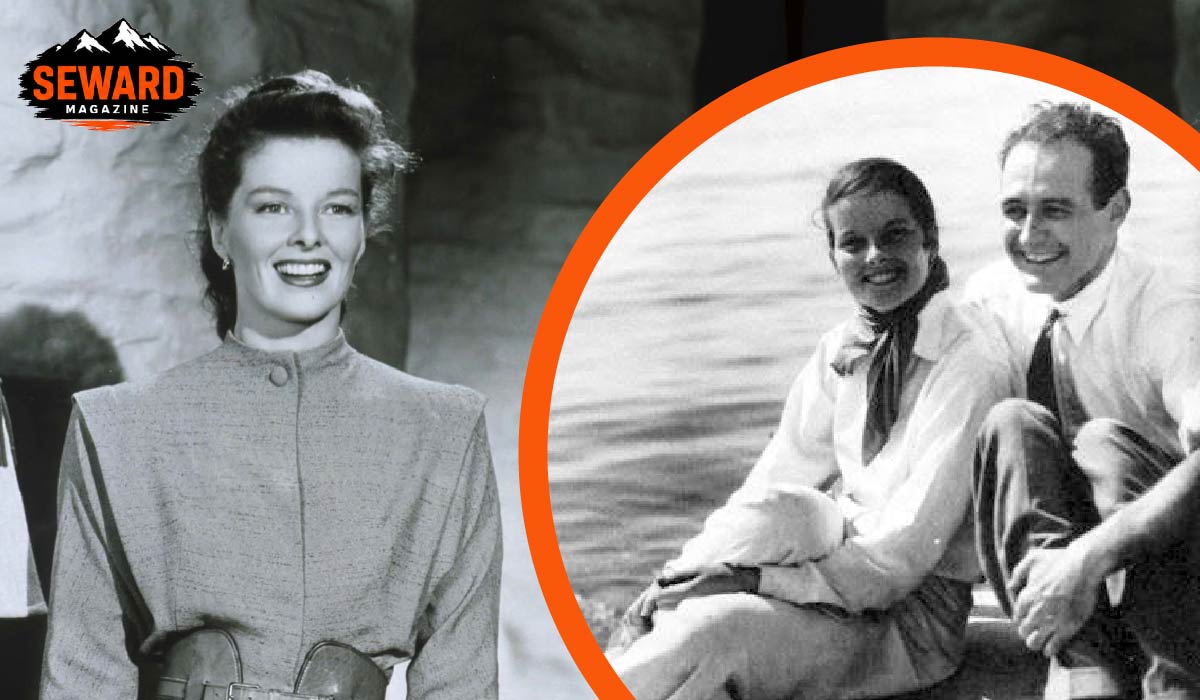
Ludlow Ogden Smith was an American businessman from a well-known Philadelphia family, but most readers know his name because he was the only husband of actress Katharine Hepburn. He became part of film history not because he chased fame, but because his life crossed with one of Hollywood’s most admired stars at a very important moment in her journey. Even today, people still search for him because his story helps explain a private side of Hepburn that many shorter biographies leave out.
He is remembered as a quiet, thoughtful man whose nature was very different from Hepburn’s bold and driven personality. That contrast is one reason their story still feels real and human. It was not a dramatic public romance built on scandal. It was a relationship between two very different people who cared for each other deeply, even when life took them in separate directions. Their marriage was short, but their connection lasted much longer than the marriage itself.
In this article, we discover who Ludlow Ogden Smith was, where he came from, how he met Katharine Hepburn, why their marriage ended, why he changed his name, what kind of work he did, how he supported Hepburn, what happened in his later life, and why his place in history still matters. Instead of treating him as a footnote, this article looks at him as a full person with his own family, work, choices, and legacy.
Quick Bio
| Detail | Information |
|---|---|
| Full Name | Ludlow Ogden Smith |
| Also Known As | S. Ogden Ludlow / Ogden Ludlow |
| Date of Birth | February 6, 1899 |
| Birthplace | Philadelphia, Pennsylvania, United States |
| Nationality | American |
| Profession | Businessman; later sources also describe him as president of Ogden Ludlow Inc. |
| Famous For | Being Katharine Hepburn’s only husband and an important figure in her early life |
| Father | Lewis Lawrence Smith |
| Mother | Gertrude Gouverneur Clemson Smith |
| First Wife | Katharine Hepburn |
| Marriage Date | December 12, 1928 |
| Divorce Year | 1934 |
| Second Wife | Elisabeth Katharine Albers |
| Children | Two children with his second wife |
| Date of Death | July 7, 1979 |
| Age at Death | 80 years old |
Who Was Ludlow Ogden Smith?
Ludlow Ogden Smith was a Philadelphia socialite-businessman who came from a wealthy and respected family. Public memory has tied his name most strongly to Katharine Hepburn, because she married him in 1928 and never married anyone else after their divorce. That alone makes him important in biographies of Hepburn, but it does not tell the whole story. He also had his own family background, his own professional life, and his own reputation as a calm and decent man.
Writers and later family records often describe him as gentle, generous, and private. He did not seem to enjoy public attention in the way movie culture demanded. That makes him different from the image many readers expect when they hear about someone linked to a major star. He was not a performer. He was not trying to build a public brand. He appears instead as someone shaped by family, class, duty, and a preference for a quieter kind of life.
So, the simplest answer to “Who was Ludlow Ogden Smith?” is this: he was a businessman from an old Philadelphia family, the first and only husband of Katharine Hepburn, and a man who stayed important in her life long after their marriage ended. His story matters because it shows the human side behind a famous name and reminds us that history often remembers loud people first, while quieter people leave a deep mark in more private ways.
Early Life and Family Background
Ludlow Ogden Smith was born in Philadelphia in 1899. Records and family history sources connect him to Lewis Lawrence Smith and Gertrude Gouverneur Clemson Smith, a family with strong social standing and deep roots in the Philadelphia area. Archival material at the American Philosophical Society also shows that the Smith family preserved extensive family papers, which supports the picture of a well-established household with wealth, education, and long family memory.
He grew up in a world where family name still meant a great deal. In that setting, children were often raised with strong ideas about manners, responsibility, and public behavior. Even without turning his life into a grand story, the background itself helps explain the kind of man he became. He was not presented to the world as rebellious or flashy. Instead, he appears in later descriptions as someone steady, polite, and dependable, which fits the kind of upbringing expected in his social circle.



This family background also matters because it shaped the way others saw him when he entered Hepburn’s life. He was not unknown in his own world. He belonged to a class of East Coast families that valued order, social ties, and proper conduct. That old-world stability may be one reason Hepburn, who was energetic and ambitious, found him so appealing at first. He offered calm, support, and structure at a time when her own path was still taking shape.
Education and Social Background
Not every detail of Ludlow Ogden Smith’s schooling is easy to verify in public summary sources, but the larger picture is clear. He came from an upper-class Philadelphia family and moved in educated, socially prominent circles. Later reference works describe him as a businessman or insurance broker from a wealthy family, which suggests a life shaped by privilege, access, and the kind of preparation expected of men in his class during the 1910s and 1920s.
His social background mattered because it influenced both his public style and his personal expectations. Men from that world were often trained to be formal, controlled, and careful in public. That image fits the way he is remembered. He was not known for wild behavior or strong self-promotion. Instead, later accounts show a man who seems to have valued order, loyalty, and personal restraint. These traits would later stand in sharp contrast to Hepburn’s more independent and forceful way of living.
This section is important because readers often want to know not only who he married, but what kind of man he was before that marriage. The answer is that he belonged to an old and established social world. He was shaped by money, culture, and family standing, but he does not appear to have been arrogant or showy. Instead, his background gave him polish and security, while his personality seems to have remained quiet and modest. That mix helps explain why people remembered him warmly.
Ludlow Ogden Smith Met Katharine Hepburn
Ludlow Ogden Smith met Katharine Hepburn in 1927, during her senior year at Bryn Mawr College. Sources tied to Hepburn’s life describe him as kind, generous, and intellectual, and those first impressions appear to have mattered to her. At the time, Hepburn was still young and still building her path. She had talent and drive, but she had not yet become the giant film figure the world would later know. Their meeting happened before the legend fully formed.
The timing of their meeting is important. Hepburn was on the edge of adult life, and Ludlow was older, established, and already shaped by a different world. Their attraction seems to have come partly from contrast. She was lively, athletic, strong-willed, and hungry for a future in acting. He came across as softer, more settled, and easier in the world around him. Sometimes such differences cause distance, but at first they can also create balance, and that seems to have happened here.
Their early connection is one of the reasons people still care about this story. It was not a meeting arranged after fame or built through Hollywood attention. It began in a more ordinary setting, near college life and social introductions, before studios and magazines turned Hepburn into a public figure. That gives their story a more personal feel. It began with two people who liked one another before the pressure of celebrity changed the shape of everything around them.
Relationship And Marriage to Katharine Hepburn
Katharine Hepburn and Ludlow Ogden Smith married on December 12, 1928. Contemporary and later sources place the wedding in Hartford, at the Hepburn family home, with a small and private setting rather than a grand public ceremony. That detail fits both the time and the personalities involved. Hepburn had not yet become a Hollywood legend, and their marriage began before her screen fame turned every private choice into public discussion.
In the early period of their marriage, Ludlow appears to have been a serious source of support for Hepburn. Later accounts and Hepburn’s own reflections show that he gave her moral and financial help while she was still trying to build her career. This matters because the marriage was not only emotional. It also took place during a practical and uncertain period in her life, when early encouragement and stability could make a real difference. He seems to have given both.
Still, the relationship was never simple. Even in the beginning, the marriage joined two very different temperaments. Hepburn was restless, ambitious, and increasingly pulled toward stage and screen work. Ludlow, by contrast, seems to have valued a quieter rhythm. That difference did not destroy the marriage overnight, but it shaped it from the start. Their union was real, affectionate, and meaningful, yet it already carried the tension of two lives wanting different kinds of futures.
Why Their Marriage Ended
The marriage between Ludlow Ogden Smith and Katharine Hepburn ended because their lives began moving in different directions. Hepburn’s ambition grew stronger as her acting career opened up. She wanted the stage, then films, then a larger life shaped by work and achievement. Ludlow seems to have wanted something calmer and more settled. Neither goal was wrong, but they did not fit together easily for long.
Biographical summaries of Hepburn’s life say she never fully committed herself to marriage and instead put her career first. They also point to the basic clash between her fiery, forceful nature and Ludlow’s quieter personality. By the time she moved toward Hollywood in the early 1930s, the strain had grown harder to ignore. Distance, work pressure, and different personal needs all seem to have made the marriage weaker.
Hepburn filed for divorce in Mérida, Yucatán, on April 30, 1934, and the divorce was finalized on May 8, 1934. Even so, the ending of the marriage does not appear to have turned into lasting bitterness. That is one of the most unusual parts of their story. Many celebrity marriages end with anger or silence. This one ended in law, but not in total emotional separation. In time, they remained part of one another’s lives in a way that continued to surprise people.
Why Ludlow Ogden Smith Changed His Name
One detail readers often notice is that Ludlow Ogden Smith later changed the form of his name. Sources about Hepburn commonly say he changed it to S. Ogden Ludlow so that Katharine Hepburn would not become “Kate Smith,” a name she thought sounded too plain and also matched a very famous singer of the era. Whether readers find that story amusing or practical, it has remained part of the couple’s public history for decades.
The name change also tells us something about identity and image. Hepburn already had a strong sense of herself and how she wanted to be seen. In that light, the change seems to fit her character. At the same time, later newspaper summaries show that Ludlow did in fact stop using the original order and eventually used versions like S. Ogden Ludlow or Ogden Ludlow. So this was not just a rumor with no real-world result. It became part of how he presented himself.
Still, the name change should not overshadow the man himself. It became one of those memorable details that people repeat because it sounds colorful, but it is only a small part of his life. More important than the switch in name was the larger fact that he kept living quietly after the marriage ended. He did not build a public identity around being Hepburn’s former husband. In many ways, changing the name may even have helped him move away from that spotlight.
Career, Business, and Professional Life
Ludlow Ogden Smith should not be seen only through his marriage. Later reports describe him as president of Ogden Ludlow Inc. and credit him with creating the “Ludlow Formula,” described as an early system used in financial institutions before the computer age fully changed office work. Even if many readers first arrive through Hepburn, this part of his life matters because it shows he had work, ideas, and standing beyond celebrity history.
Some references call him an insurance broker, while others use broader terms such as businessman or industrial engineer. That difference in wording likely reflects the way his work was described across time, not a total contradiction. The basic point remains stable: he worked in business and appears to have had a respected professional position. He was not a man living only on a family name. He seems to have had a real role in the financial and business world around him.
This professional side is important for a complete article because it restores balance to his biography. Too many short pieces reduce him to “Hepburn’s ex-husband” and stop there. But a fuller picture shows a man with business ability, social standing, and a life that continued long after the divorce. He may not have left behind the kind of public fame that actors do, yet he still belonged to a world of work and influence that deserves to be remembered on its own terms.
How He Supported Katharine Hepburn’s Career
One of the clearest facts about Ludlow Ogden Smith’s role in Hepburn’s life is that he supported her in the early days of her career. Biographical summaries say Hepburn later expressed gratitude for both his financial and moral support when she was still trying to establish herself. That point matters because early careers often depend on unseen help, and Hepburn herself seems to have known that Ludlow gave her that help.
In her autobiography, Hepburn looked back on the marriage with unusual honesty and used the phrase “a terrible pig” about the way she took so much from his love while focusing on her own rise. That short phrase carries a lot of weight. It suggests that she later understood how one-sided some parts of the relationship had become. It also suggests that Ludlow gave more than affection. He gave practical backing and emotional steadiness when she needed both.
Some later accounts go further and connect him to the period around Hepburn’s comeback, but the strongest verified point is simpler and safer: he helped her at the beginning, and she never forgot it. That is important enough on its own. A person does not need to stand in the spotlight to shape another person’s path. In Ludlow’s case, his support seems to have mattered most when the future was still uncertain, and success had not yet become secure.
Life After Divorce
After the divorce, Ludlow Ogden Smith seems to have returned to the kind of life that suited him better: more private, more structured, and less tied to public attention. Unlike many people attached to a famous figure, he did not spend his later years trying to keep himself in the news. The available record suggests the opposite. He moved on, continued his work, and built the next part of his life outside the glare that followed Hepburn.
This quietness is part of what makes him interesting. Divorce from a major star could easily have turned into a public identity. For Ludlow, it did not. He seems to have stayed rooted in family and business rather than using old personal ties as a path to fame. That choice says a great deal about his character. It supports the consistent image of a man who valued privacy more than public recognition.
His life after divorce also helps readers see that his story did not end in 1934. Too many articles stop there, as if the most important thing about him was already over. In fact, he lived for decades after the marriage ended. He remarried, had children, and continued to be connected in some way to Hepburn while still building a separate life. That second half of his life is essential if we want to understand him as a full person.
Second Marriage and Children
Ludlow Ogden Smith married Elisabeth Katharine Albers on September 26, 1942. Family history records and memorial sources list this second marriage clearly and show that it marked a new stage in his life. Where his first marriage is remembered because of fame and public interest, this second marriage seems to belong more to the private world he preferred. It appears to have given him the quieter family life that did not fully happen during his years with Hepburn.
Sources also say Ludlow and Elisabeth had two children. Their names are usually given as Lewis Gouverneur Ludlow and Katharine Ramsey Ludlow. These details matter because they show that he did, in time, become a family man in a more settled way. That fact adds another layer to his biography. He was not simply a husband in one famous marriage. He was also a father, and the later part of his life included ordinary family responsibilities and attachments.
This second family life changes the shape of his story. It shows recovery, continuity, and growth after heartbreak. Many readers come looking only for the Hepburn link, but a stronger article should also show that he had a meaningful life beyond that chapter. His second marriage and children remind us that personal history is rarely made of one event alone. People continue, love again, and build new homes even after important early relationships come to an end.
Relationship With Katharine Hepburn After Divorce
One of the most remarkable things about Ludlow Ogden Smith and Katharine Hepburn is that their relationship did not truly end when the marriage ended. Multiple summaries of Hepburn’s life say they remained friends until his death in 1979. That simple fact tells us a great deal. Whatever failed in marriage did not erase the respect, gratitude, and human bond between them. In some ways, their later friendship may be the most moving part of the whole story.
Hepburn’s later comments support that idea. In looking back, she did not dismiss him or speak of him as a mistake. Instead, she openly acknowledged what he had done for her. That kind of honesty is rare, especially when public figures speak about former spouses. Her words suggest that she carried both guilt and gratitude, but above all, she carried memory. She knew he had loved her deeply and helped her when she was young and still uncertain.
This lasting bond is one reason Ludlow’s name stays alive. If the marriage had ended in bitterness and silence, history might have left him behind. But because the connection remained, he stayed part of Hepburn’s personal story in a living way. Their example also challenges a common idea that divorce always means total emotional separation. In their case, the marriage ended, but care remained. That human truth gives the story its unusual depth and warmth.
Final Years and Death
In his later years, Ludlow Ogden Smith faced serious illness. Memorial accounts say he suffered from cancer, and those same accounts also say that Hepburn visited him regularly during that final period. While this detail comes mostly from later memorial reporting rather than a major newspaper profile, it has been repeated often enough to become part of the remembered story of their long connection. It fits the larger fact that they stayed close until the end of his life.
Ludlow died in 1979, at age 80. Family and memorial records place his lifespan as 1899 to 1979, which matches the dates used in reference material tied to Hepburn’s biography and family history sources. Even in death, he remained linked to the quieter side of Hepburn’s life story. He was not the great romance that filled movie magazines, but he was the husband she had, the man who helped her early, and the friend who remained in the picture long after the marriage ended.
His final years also bring the story full circle. The young couple who married before fame became something else in later life: two older people connected by memory, loyalty, and history. That does not erase the pain of their divorce, but it does soften the ending. He was not forgotten by the woman who once left him behind for a larger dream. That quiet return, more than anything flashy, is what gives his final chapter its emotional power.
Legacy and Historical Importance
Ludlow Ogden Smith’s legacy is not the legacy of a movie star, and that is exactly why it deserves care. He matters because he helps us see the fuller human history around Katharine Hepburn. He was there before her fame reached its highest point. He supported her when she was still becoming herself. He stayed important to her memory even after the marriage ended. That makes him more than a side note in someone else’s life.
He also has historical value in his own right. He came from an old Philadelphia family, worked in business, and seems to have lived with a strong sense of privacy and duty. Later accounts that describe his business role and the “Ludlow Formula” suggest that he should be seen not only as a husband in a celebrity biography, but as a man with work and social standing of his own. Even if his public name remained smaller, his life still had shape, purpose, and weight.
In the end, Ludlow Ogden Smith is important because history is not made only by the loudest voices. Sometimes it is shaped by the steady person who gives support, love, and room for someone else to rise. He was one such person. His story brings balance to Hepburn’s biography and adds a more human layer to a famous life. That is why readers still look for him, and why his name remains worth remembering today.
Conclusion
Ludlow Ogden Smith was more than the man once married to Katharine Hepburn. He was a businessman from a respected Philadelphia family, a private and gentle figure, and someone whose influence on Hepburn’s early life seems to have been real and lasting. He belonged to a different world from the one she later ruled as a film icon, yet their lives stayed linked in ways that never fully disappeared. That alone makes him worth serious attention.
His story is also valuable because it feels human. He met Hepburn before the height of fame, loved her while she was still rising, lost the marriage as her ambitions grew, then went on to build another life with work, a second marriage, and children. Even after all that change, the bond between them did not vanish. Friendship, memory, and gratitude remained. That is a rare and powerful thing in any life story, famous or not.
So when readers ask who Ludlow Ogden Smith was, the best answer is simple: he was a quiet but important man whose life touched history through love, support, and character. He may not have wanted the spotlight, but his story still carries meaning. And once we look beyond the label of “Katharine Hepburn’s ex-husband,” we find a fuller life there—one that deserves to be told with respect, care, and detail.
FAQs About Ludlow Ogden Smith
Who was Ludlow Ogden Smith?
Ludlow Ogden Smith was an American businessman from Philadelphia. He is best known as Katharine Hepburn’s only husband, but he also had his own business career and came from a respected family background.
When did Ludlow Ogden Smith marry Katharine Hepburn?
He married Katharine Hepburn on December 12, 1928. Their marriage took place before Hepburn became a major Hollywood star, which is why this relationship remains an important part of her early life story.
Why is Ludlow Ogden Smith famous?
He is famous mainly because he was Katharine Hepburn’s husband and stayed important in her life even after their divorce. Readers also remember him because he supported her in her early career years.
Did Ludlow Ogden Smith remarry?
Yes, he remarried after divorcing Katharine Hepburn. His second wife was Elisabeth Katharine Albers, and together they built a more private family life away from public attention and Hollywood interest.
Did Ludlow Ogden Smith have children?
Yes, he had children with his second wife. Later family-history records show that he became a father after his first marriage ended, which adds an important personal side to his life story.
For More Amazing Stories: Sewardmagazine